Our Research
The neural circuits that control physiology are not fixed at birth. They develop and reorganise as the needs of the body change across life. We study how hypothalamic circuits mature to control growth, and how these circuits interact with the emerging reproductive system during puberty.
Growth hormone secretion changes dramatically across development, yet we know remarkably little about how the neural circuits controlling this process are established.
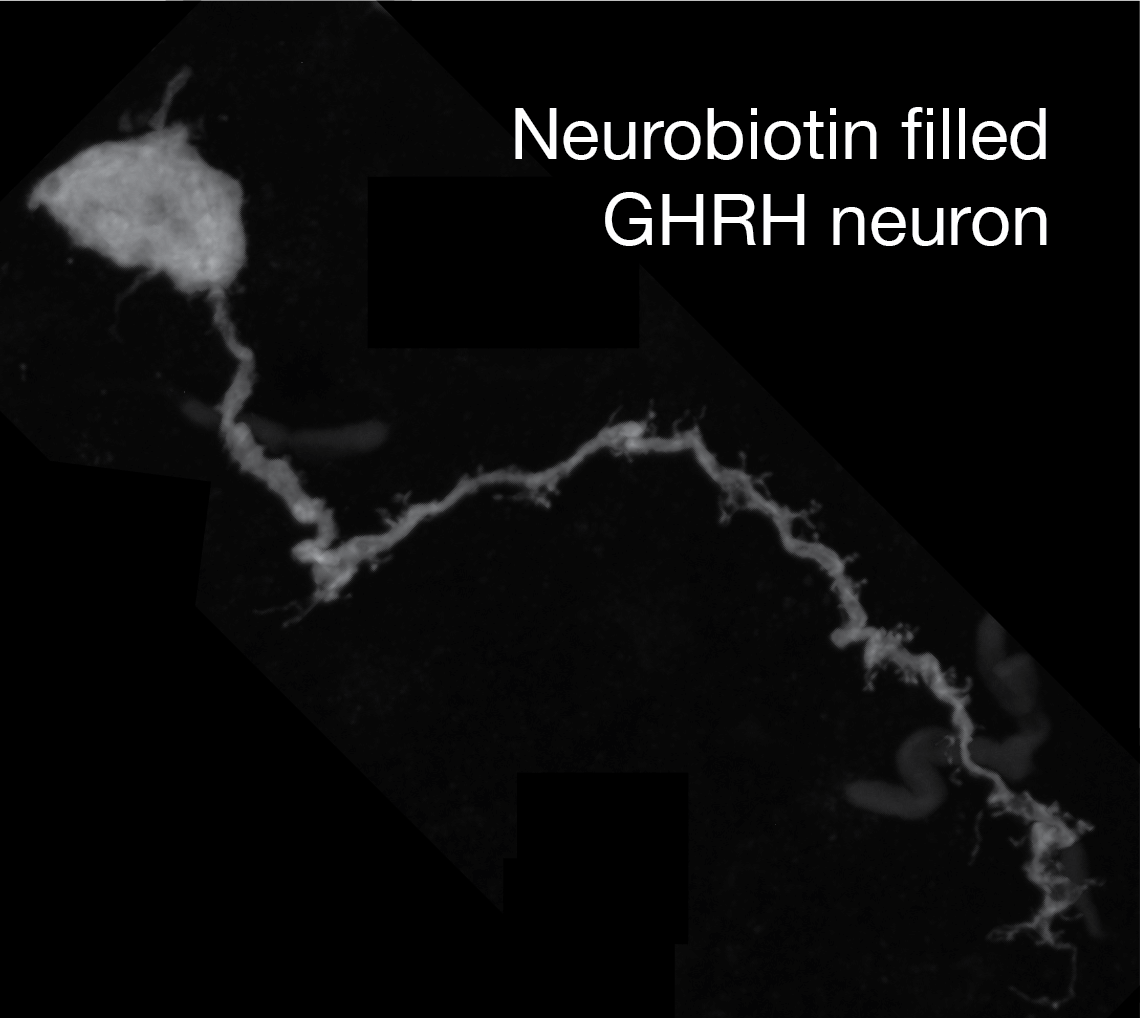
We study the development of hypothalamic growth hormone-releasing hormone (GHRH) neurons, asking how their intrinsic properties, synaptic connections and activity mature from early life into adulthood. By combining electrophysiology, neural circuit mapping, in vivo recording and endocrine measurements, we aim to understand how the brain builds a functional growth-control system and what determines its developmental trajectory.
How does the developing brain control growth?
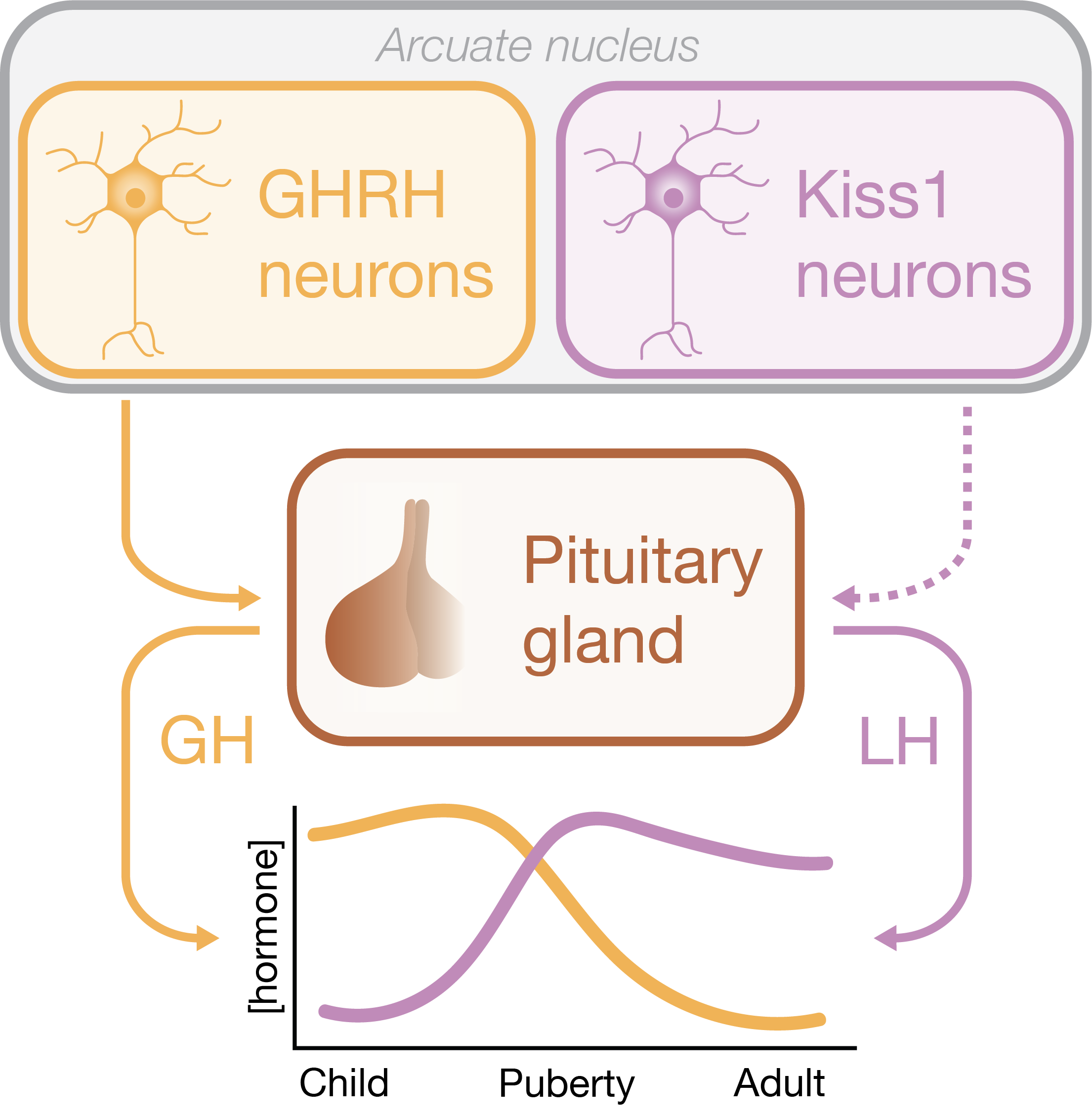
Puberty requires the brain to coordinate reproductive maturation with profound changes in growth and metabolism. We investigate how the neural systems controlling growth and reproduction interact across puberty, using GHRH and kisspeptin neurons as entry points into this wider network.
By combining electrophysiology, neural circuit mapping, in vivo recording, targeted circuit manipulation and endocrine measurements, we ask how these systems communicate and reorganise across puberty, and whether coordinated changes in neural activity and connectivity allow the brain to shift physiological priorities as the body transitions towards adulthood.
How does the brain transition from growth to reproduction?